

A lead generation business is a fantastic way for anyone with practical sales and marketing skills to offer a valuable service to other businesses with proven demand.
You don’t need to build a product, can use tried and tested strategies, and don’t need to reinvent the wheel to see results.
In this guide, I’m going to show you everything you need to know about how to start a lead generation business or agency from scratch.
We’ll cover everything, including:
- What is a Lead Generation Business?
- How Much Does It Cost to Start a Lead Generation Business?
- Useful Tools and Software For Lead Generation Businesses
- What Kind of Business Entity will You Need for Starting Your Lead Gen Agency?
- Laws to Consider for Starting Your Lead Generation Business
- Defining the Target Audience of your Lead Generation Business
- How do Lead Generation Businesses Earn Money?
- What Industries Pay the Most for Leads?
- Acquisition Channels for Lead Generation Businesses
- How to Deliver Leads to Your Clients
By the end, you’ll know exactly what to do to get your business off the ground.
Let’s dive in.
What is a Lead Generation Business?
A lead generation business sells qualified sales leads to clients (other businesses) who want more customers. Essentially, a lead generation business is a broker between their clients and people who match their clients’ ideal customer profiles.
Business owners use lead generation agencies and services because they don’t have time to focus on client acquisition themselves, but still want a predictable stream of new leads coming in every month.
If you can build a system that enables you to send a list of qualified prospects to established businesses every month, you’ll be able to generate consistent profits without needing to even get on the phone with the leads you’re sending your clients.
There are a few popular models for lead gen agencies, and I’ll get to those later in the post.
Now, let’s take a look at some of the reasons for starting one.
Why Start a Lead Generation Business?
1. Low Barrier to Entry
If you’re dreaming of starting a business but don’t have a product or service to sell, lead generation is an option.
The barrier to entry is low, as you don’t need to build anything (except your systems).
If you have a background in sales and marketing, you’ll be able to get off the ground quickly.
And, considering over half of marketers say generating new sales-ready leads is their biggest challenge, there’s clear demand.
2. Easily Validate Your Idea and Industry
If you want to find demand for the type of leads you’re going to be selling, just head to Google.
Chances are, you’ll see a list of Google Ads.
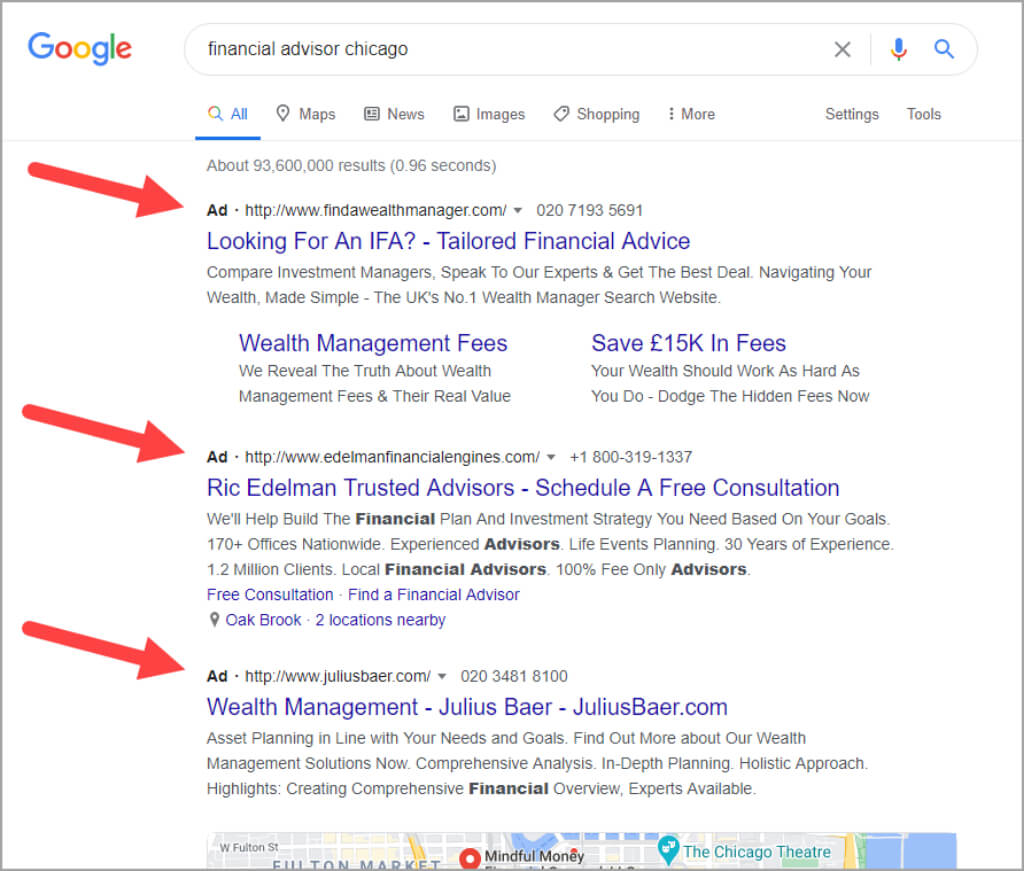
That’s the validation you need.
Business owners and marketers at these firms are willing to spend money to drive qualified traffic to their websites.
If you can deliver them leads on a plate every month, they’ll be happy to spend that money on your services instead (or as well as) of their paid ads.
You’ll need to package and sell your services in a way that’s convenient for them, and we’ll get to that later.
How Much Does It Cost to Start a Lead Generation Business?
Starting a lead generation agency has a small cost barrier, but it’s far more accessible than many other business model types.
A lead generation agency can be started with a website and a couple of tools to help you reach out and engage with leads.
Let’s take a look at some essential and nice to have tools in the next section.
Useful Tools and Software for Lead Generation Businesses
Keep in mind that the pricing we mention is a ballpark figure. Depending on the plans and features you need for each tool below, the price may vary.
Domain Name
Estimated cost: $10-20 per year
A custom domain for your business and website is essential. No one will want to do business with you if you only have a Facebook page and a LinkedIn account. You don’t need a complex website, but a place to showcase what you do will be good.
Google Domains and Namecheap are two good domain registrar options.
When buying your domain, buy two at the same time. One will host your website, and the other will be used for your cold emailing (more on this later).
Email Provider
Estimated cost: $5-10 per month
To send emails at scale you’ll need a paid Outlook or Google account.
We’ve found that Outlook has better email deliverability, but either will work well and are better than sending from a free account.
When you set up your email account, make sure to configure all of the technical details like DMARC, SPF, and your DKIM records. Without these, email servers won’t know who is sending emails and there’s a high chance that your emails land in the spam folder.
QuickMail
Estimated cost: $49 per month
We’ll get into it more later, but you’re going to need a tool to help you automate and personalize your cold outreach.
QuickMail includes all of the features required for personalized outreach, such as the ability to import prospects and schedule email campaigns.
It’s designed specifically for lead generation agencies, with features like:
- Native integration with a free email warm-up tool MailFlow
- Inbox rotation for multiple team members
- Analytics to see what’s working
- Manage every campaign from one dashboard
Our software also integrates with Zapier, so you’ll be able to send leads to Google Sheets, your (or your clients’) CRM, and automate other tasks you need to simplify your workflow.
A website, email address, and email outreach tool are the basics that you’ll need to run personalized, automated outreach campaigns to generate leads for your clients.
LinkedIn Sales Navigator
Estimated cost: $99 per month
If your clients have B2B companies, LinkedIn will be a great way to find leads.
You’ll be able to quickly identify leads in your industry using advanced search features, and use LinkedIn automation software to connect and engage with prospects at scale.
Sales Navigator is essential if you’re using LinkedIn regularly, and I’ll show you more benefits to using LinkedIn in your lead generation business further down.
B2B Contact Database
Estimated cost: $100 per month
A tool like Apollo will let you find email addresses at scale based on lead demographic and firmographic criteria.
For example, you can run a search for companies with {{Software company}} + {{10 employees}} + {{Chicago}}.
The tools will give you a list of companies that match your criteria, and you’ll be able to start reaching out to them to see if they’d be interested in your clients’ services.
BuiltWith
Estimated cost: $296 per month
If you’re generating leads based on the technology they use (e.g., Shopify store owners), BuiltWith is an amazing tool.
Add the technology a client should be using, and it’ll show you all the websites in the database that use it and extra details on other tools in their tech stack.
It’s expensive, but if it lets you generate qualified leads, it’ll quickly deliver ROI.
Unbounce
Estimated cost: $80 per month
Unbounce is an easy-to-use landing page builder that will help you create pages to use in ad campaigns.
You don’t need any coding or design knowledge to build high-converting landing pages, and it connects with a variety of CRMs, Zapier, and email marketing platforms.
With these tools, you can run professional outbound campaigns with access to detailed information on prospects. You can be confident that your targeting is good, and speed up your lead generation workflow.
There are more affordable landing page builders available on platforms like WordPress, but Unbounce is simple and effective and you can get off the ground quickly. Assuming your site visitors are qualified, it’ll deliver clear ROI.
What Kind of Business Entity will You Need for Starting Your Lead Gen Agency?
As you’re going to be reaching out to companies and dealing with leads and clients’ personal details, you should set up a business entity, like an LLC.
I’d strongly advise against running any lead generation campaigns without the protection of an LLC.
If you need to hire people to help you run your company, you can hire full-time employees, or work with contractors and freelancers for specific tasks.
Laws to Consider For Starting Your Lead Generation Business
Another consideration is that you’ll need to abide by all the laws surrounding cold outreach in your area.
This could include:
Luckily, none of these explicitly forbid cold outreach to business owners.
However, they do forbid you from sending low-quality emails to prospects who clearly won’t be interested in your services.
This means you can’t just scrape a list of 1,000 prospects from LinkedIn and hit send on your email campaign.
Take your time to review your email list, personalize every email you send, and focus on quality over quantity.
Defining the Target Audience of Your Lead Generation Business
Arguably the most important part of starting your lead generation agency is deciding who your customer is – i.e., who you’re selling leads to.
This affects everything, from your branding to your sales tactics, to how you generate leads.
Here are a few factors to think about when deciding on your customer type:
1. Local vs. Industry-Based
Local lead generation is a popular model.
This means you’ll target companies in a certain city or region. For example, you might want to target:
- Real estate agents in London
- Software development agencies in Boston
- Plumbers in NYC
The key is that your market is located in one easily defined area. It’ll make identifying potential customers easy, but there are some downsides to consider.
Benefits of Focusing on Local Lead Generation:
- Less competition
- Easy to identify potential customers
- Access to local resources like your Chamber of Commerce or local business networks
- Easier to build relationships with local business owners
- Can use channels like Direct Mail
Disadvantages of Local Lead Generation
- Harder to scale indefinitely
- Smaller total addressable market
- Smaller clients may have smaller budgets
Another option is to focus your lead generation business on a particular industry.
You’ll have a larger potential market, and in theory, can have more total customers than if you were only focused on businesses in a local area. National or international companies will have larger budgets and may understand the ROI on your services better than a small local company would.
For example, you might sell leads to:
- Software companies
- Design agencies
- Financial advisors
Benefits of Industry-Based
- Can still be highly specific
- Allows for scale into new countries and markets without changing messaging much
- All customers will have similar pain points
- You won’t run out of leads
Downside of Industry-Based
- Potentially harder to find great-fit leads
- More diluted messaging
Average Contract Value / Cost Per Lead
Another method of choosing your market would be based on Average Contract Value, or the typical industry Cost Per Lead.
Industries where leads cost more could be more profitable, as you can then charge more to the end customer.
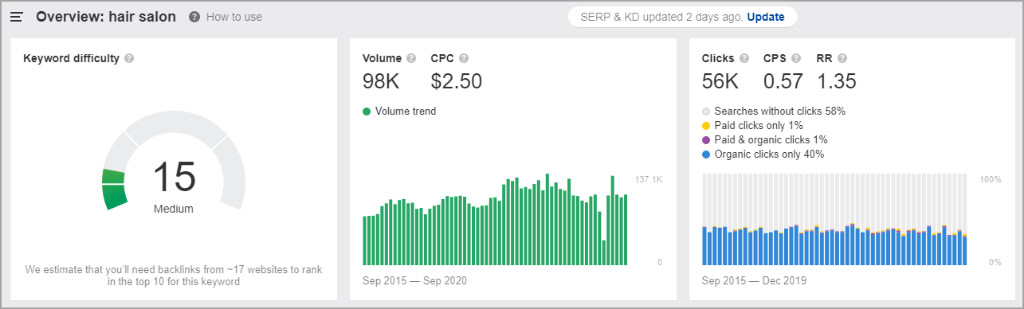
For example, a financial advisory firm or a software development agency would likely be willing to pay more for a list of leads than a hair salon would.
An easy way to find out if an industry has high competition and high cost-per-lead is to use tools like Ahrefs or Google Keyword Planner.
For example, if we look up searches for the keyword ‘Hair Salon’ in the United States, we can see that the average Cost Per Click (CPC) for search ads is $2.50.
On the other hand, the CPC for ‘Financial Advisor’ is $30.00.
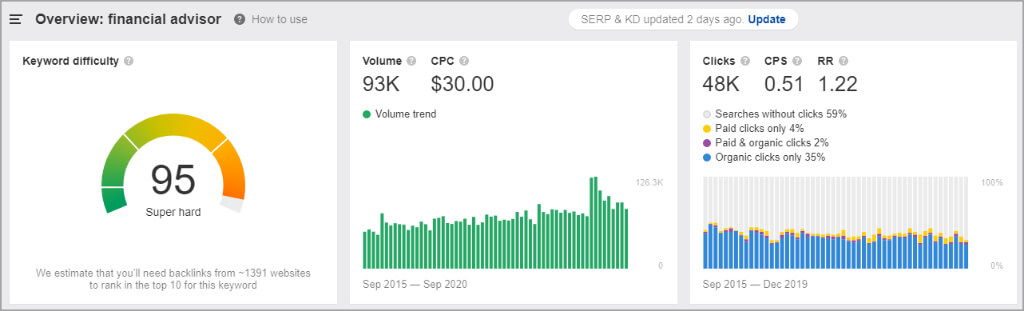
Financial advisory firms are having to pay far more to get potential clients to their site with ads, and if you can generate truly sales-ready leads, most would be willing to pay several hundred dollars per lead.
If you have a system to generate leads for financial advisors, chances are, they’ll be happy to pay good money for those leads.
That said, don’t only focus on CPC.
In most cases, it will be harder to generate leads in more competitive industries, and you’ll have more competition. Other lead generation agencies will be focused on the market. However, as long as you have good sales skills to acquire clients and have a system to predictably generate leads, it’s still a good option.
If you’re torn between two types of customers, consider reaching out to those customers with a cold email or cold call and ask if they’d be interested in a lead generation service.
After all, you need clients to have a business.
If they tell you it’s a service they’d use, you have validation.
How do Lead Generation Businesses Earn Money?
Next, you’ll need to consider how you’re going to make money.
Are lead generation businesses profitable?
Your lead generation business can be very profitable if you can find the right margin between your cost to acquire leads and the price you sell the leads for.
There are 500+ successful lead generation companies currently listed on Clutch. Many of them have over 1,000 employees, which is a clear sign lead generation businesses can be lucrative and scalable.
To find the right profit margin and build a lucrative lead generation agency, you need to think carefully about:
- the target audience you plan to sell leads to (we already spoke about this)
- the pricing model you want to run with
- the lead generation channels you wish to leverage
I’ll dive deeper into each of these below. Let’s start with some of the more common pricing models for lead gen businesses.
Option 1: Monthly Retainer
A popular model is the flat fee retainer model.
It’s a simple strategy, and it works by sending companies a set amount of leads every month for a fixed price.
Essentially, you’ll provide a service like ZoomInfo or Apollo, but in a white-label, white-glove style.
After all, business owners don’t want to be filtering through hundreds of thousands of potential leads. They would prefer a set amount, pre-qualified, delivered to them.
Depending on the industry, lead qualification level, the price you can charge will vary.
One consideration when choosing this model is that it can be harder to charge a premium.
As you’re delivering a pre-agreed amount of leads, you’ll risk focusing on quantity over quality. This could result in lower conversion rates for your clients, making them less receptive to continuing with your service.
As well as that, if you deliver a small business owner 300 leads at once, it might be too much for them to handle.
They’ll pay you once, but then cancel, as it’ll take them months to go through the list due to the constraints of their business and team size.
Option 2: Cost Per Lead
Another variation is a Cost Per Lead (CPL) model.
You can usually charge anywhere from $20 to potentially hundreds per lead, depending on your industry and how qualified the lead is.
This method usually takes more work than the flat fee model, and most companies selling leads on a CPL basis
This is popular for a few reasons.
First, you can use your client’s branding, assuming they’ve agreed to it when you pitched them. Your ads and lead generation strategies can be uniquely targeted to their perfect customer, and won’t be as generic as if you were just dipping into a lead database.
Secondly, it makes selling easy. Your clients will be confident knowing they only pay if the leads you deliver match their ICP.
Third, it’s easy to work out your profit margins. A simple way to work it out is:
Price Client Buys Leads from You – Cost to Acquire Lead = Profit
There’s also potential for the leads to be higher quality. If you’re using Facebook or Google Ads, the leads entering your sales funnel will be actively looking for help with a problem your customers can help with.
If your ads include a form submission, those form submissions will contain information your client can use to make closing the sale easy for them to close.
Another strategy, which we’ll cover more later on, is to set up websites for your lead gen efforts.
For example, you could set up a website optimized to rank for a query like “Lawyers in Seattle”. The website can have a contact form, with clear instructions to fill it out with relevant details, and a way to get in touch with them. Once your site is ranking, it’ll be bringing in leads on auto-pilot. This is a great strategy, and we’ll cover it more in-depth further down.
There are several variations on the CPL model.
You could charge based on:
- Cost per meeting/appointment
- Cost per form fill
- Exclusivity of leads (i.e., can you sell them to other clients too?)
You’ll be able to charge more for a successful meeting than a form filled, but the upfront cost and sales funnel you use will need to be more advanced.
What Industries Pay The Most For Leads?
As mentioned above, the market you choose will dictate how much you can charge per lead.
There are also other factors affecting how much people will pay for leads. Some of those factors include:
- Lead age
- Lead engagement level
- The information available on the lead (e.g., did the lead provide you with details on budget, purchase intent, etc.)
- Industry
As a rule of thumb, industries that will pay the most for leads are generally those that will cost you the most to bid on in Google Ads.
The most expensive keywords to bid on, according to Google Ads data, are:
- Insurance ($54.91/click)
- Loans ($44.28/click)
- Mortgage ($47.12/click)
- Attorney ($47.07/click)
- Credit ($36.06/click)
That said, don’t ignore industries that aren’t on these common lists.
Look for industries with high Customer Lifetime Value (CLV), as a high CLV means companies are more willing to pay higher costs upfront to acquire customers.
Not all industries are big on PPC. For example, enterprise software companies won’t rely purely on ads, as they’ll have a dedicated in-house team of SDRs.
If you can deliver leads worth potentially hundreds of thousands (or more) to companies with high CLV, you’ll be able to charge a high price but still deliver big value to your customers.
Acquisition Channels for Lead Generation Businesses
So, you have an idea about the market you’re in, and how much you can charge for leads.
But, how will you acquire leads for your customers in the first place?
Let’s take a look at some of the most effective ways to generate leads for your lead gen agency clients.
Cold Email Outreach
If your clients want B2B leads, then cold email is an effective, highly targeted, and powerful way to get in touch with potential leads.
It’s easy to get started with.
You’ll need a domain for your cold emailing efforts (I’d recommend having a dedicated domain for your cold email – for example, sending emails from domain.io when your website is hosted on domain.com).
This means if your email address ever gets blacklisted, it won’t affect how your emails to existing clients and contacts are delivered.
To start, create a list of prospects using tools like Sales Navigator. Verify those emails to ensure they’re not going to bounce. You can do this inside QuickMail.

Then, write personalized emails to each one.
You can use an email template for your emails, but you should always add unique personalization to each one
One way to verify if your email is personalized is by asking: “Could I send this email to anyone else?”.
If the answer is yes, it’s not personal enough.
One way to easily personalize emails at scale is by using merge tags. This lets you import a CSV of prospects with a personalization field and automatically add them to your email.
For example, you could have a field called {{first_line}} where you write out a personal first line for each prospect, or include a customized {{PS}} at the end of your email.
A key reason to use cold email software over manually doing everything is that you can automatically follow up without thinking about it.
In QuickMail, you can add another Step to your campaign, and your follow-up will be sent at a predefined interval (e.g., 4 business days after no reply).
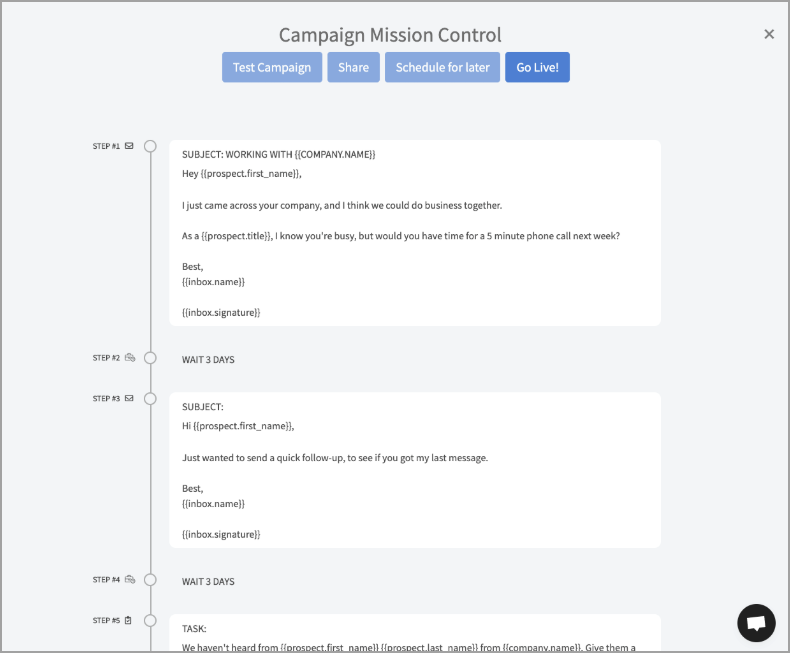
If prospects reply before your follow-up sends, they’ll be paused in your campaign, so there will be no issues with automatic emails being sent to people you’re already talking to.
One of the best parts of cold emailing is that it can be scaled up or down as you need to. Once you build an effective system for personalizing every email and have found email and follow-up templates that generate positive replies, it can run like clockwork.
Finally, if you’re sending cold emails regularly, you’ll always need to ensure your emails are landing in your prospects’ inboxes.
Check out our guide to cold email deliverability here for actionable tips on that.
Cold Calling
Cold calling is an awesome way to generate leads when done well. In fact, 82% of buyers say they have accepted meetings with salespeople after being contacted through a cold call.
You’ll be able to use cold calling to generate leads for your clients, but you can also use it in your own business to reach out to prospective clients.
If you don’t want to spend all day on the phone, an effective way of using cold calling in your lead gen workflow is to call people who don’t reply to your first email.
A simple way to do this is to add a Task to your QuickMail campaigns with a cold call step.
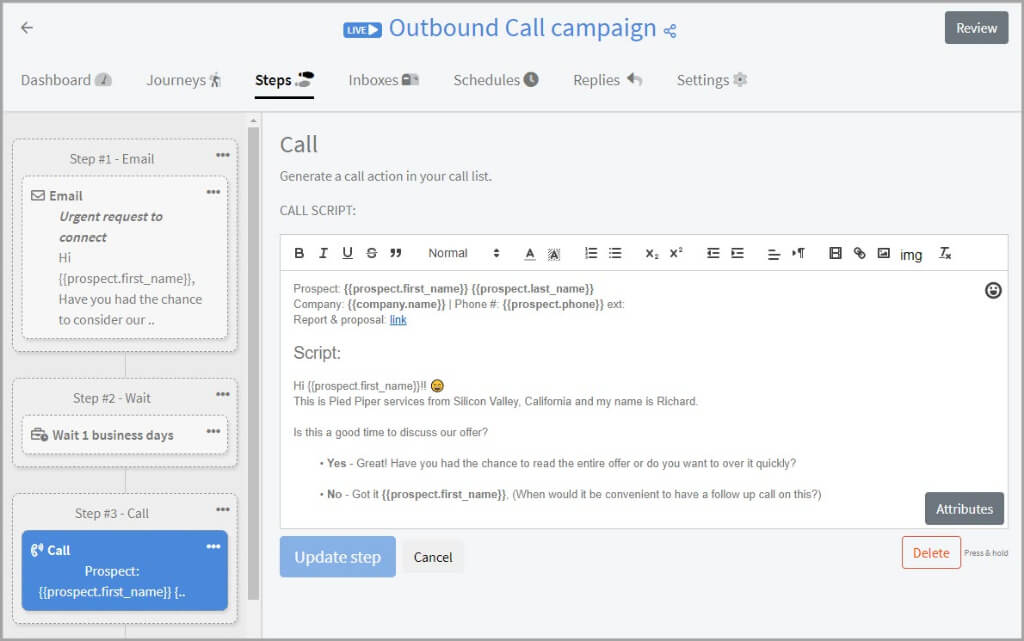
If prospects don’t reply, you can add a task, with details such as a call script, and quickly pick up the phone and call them.
QuickMail has a native integration with Aircall which is a powerful way to manage your cold calling campaigns.
Once you’ve found a basic cold calling script that works, it’ll be a powerful tool in your lead generation system.
Google Ads
If you have a budget, creating highly targeted landing pages with a lead capture form (in exchange for an asset like an eBook or other useful information) then promoting those through Google Ads is an effective way to capture leads.
Using Keyword Planner you can quickly identify valuable keywords to bid on, and get in front of relevant audiences that your clients want to promote to.
Once you’re capturing leads, make sure to send them on to your clients quickly. After all, the longer you wait, the less interested the leads will be.
Facebook Ads
Facebook Ads are a simple and effective way to generate leads. You’ll need to spend money to get started, but once you find a formula that works you can slowly scale it up and have a predictable way to generate leads.
Facebook Ads work well for local lead generation because it’s simple to define your target audience.
You can direct your leads to a landing page, or, use Facebook Lead Ads. Your call-to-action can say “Add your details to get a callback from us”, and anyone needing the services your clients offer will be happy to do so.
However, before spending hundreds on FB ads, find out if they work for your market.
You can use the Facebook Ad Library to see if companies in the industry you’re targeting are using ads.
For example, here are the ads Google is currently running:
You’ll be able to see how much engagement different ads get, and how long companies run them for. If they’ve been running them for several months, you can assume they’re delivering ROI, and you can learn from them when implementing your own ads.
You can add your competitor’s Facebook pages to find out what kind of ads they’re using, and which ones are working for them.
However, Facebook Ads aren’t for every lead generation company.
If you’re just getting started, it doesn’t make sense to jump into ads.
Validate your services using cold email or cold calling, then, when you know people respond to your value proposition, run tests with ads.
They can get expensive quickly, both financially, and in terms of your management time. You’ll need to check the ad spend, performance, continually optimize them, and it’s going to cut into your week.
As well as that, if your business relies on Facebook and your ad account gets frozen, you’ll have no backup plan and won’t be able to generate enough leads to send your clients.
SEO
If you can create a website that ranks well for terms that leads are searching for you can generate qualified leads for your clients with ease.
This is particularly effective if you’re targeting a local area, as you get the opportunity to rank in Google’s local pack.
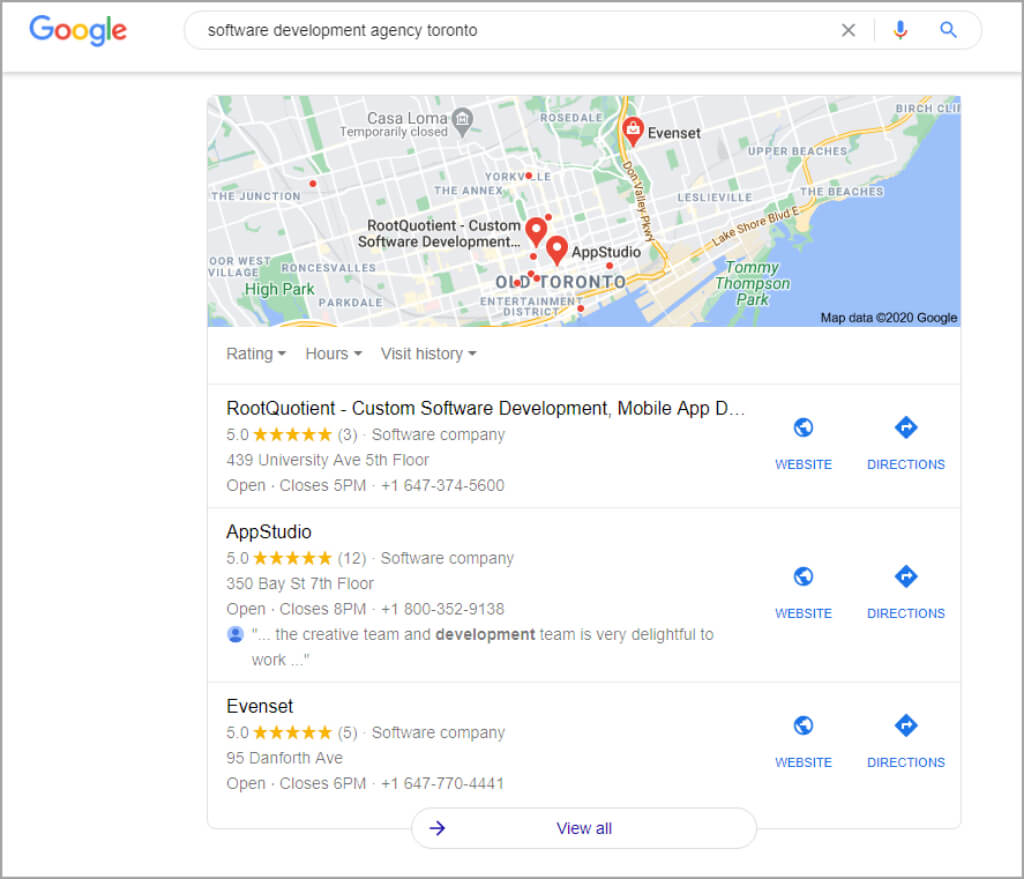
If you know what you’re doing with SEO, it’s an amazing way to generate local leads.
As long as your website content matches the search intent, provides relevant information, and includes a contact or inquiry form, you’ll be able to collect leads that you can then deliver to your customers for a cost.
Even if you can easily generate leads using paid ads or cold email, having your website work for you will ensure you never need to worry about having your lead flow dry up. You’ll always have new, interested, and qualified prospects to deliver to your clients.
- Create targeted landing pages for every region you target
- Create useful eBooks, blog posts, and informational content that your leads can download
- Host online tools like calculators or quizzes
The benefits of using SEO are that, if done well, your leads will be pre-qualified, and you know they’re already in the market for a solution or service like what your clients can offer.
The main downsides are that it takes time to rank in search engines. If you’re in a competitive industry, you’ll need to invest in creating a technically good website, secure hosting, high-quality content, and may need to build links to be in with a chance of ranking.
Until your website is ranking, no one is going to be arriving, and you won’t be generating any leads.
There’s also a risk that your site loses its rank over time if you stop investing in SEO. If that happens, you’ll start losing lead volume and will need to diversify your lead acquisition strategies to keep serving your clients with leads.
If you’re in an industry that has buyers and decision-makers on LinkedIn, you need to be there.
Typically, it’s a fit if your clients are B2B and sell to a customer that also uses LinkedIn. It’s a fit for businesses like:
- Software companies
- Software development companies
- Accountancy firms
- Other similar professional services
As mentioned previously, make sure you have a Sales Navigator account.
It gives you access to improved targeting criteria, removes limits on searches, and gives you the ability to save accounts to your CRM.
There are a variety of automation tools available for LinkedIn to speed up your prospecting, too.
Some useful ones include:
- Zopto for automatically connecting with leads
- Alfred for messaging and follow-ups to leads
- Lusha to extract emails from LinkedIn
If you’re in B2B, LinkedIn will likely have the highest ROI of any social media platform, and it’s continuing to grow.
HubSpot research found that traffic from LinkedIn generated the highest visitor-to-lead conversion rate at 2.74%, almost 3x higher than Twitter (.69%) and Facebook (.77%).
Like with other cold outreach strategies, when connecting with prospects, make sure to add a personalized note and aim for quality over quantity. It may take longer, but the results will make it worth it.
You can also run ad campaigns on LinkedIn. The average CPM is expensive compared to Google or Facebook Ads, with advertisers paying on average $6.59 per 1000 impressions. But, if you’re targeting a B2B audience, it’s the perfect social media platform to use.
Finally, ensure your profile is up-to-date, professional, and reflects the service you’re providing.
Fill out as much relevant information as you can. It’ll help you close new clients as they trust you’re a good fit for their lead generation needs.
For The Best Results, Combine Marketing Strategies
When you first start your lead gen agency, you’ll focus on one or two channels.
In most cases, this is going to be cold email and LinkedIn outreach because they have low upfront costs compared to ads.
But, once you’re making money, reinvest into other marketing channels. If you can identify and close clients using cold email, you can try and turn those same value propositions into Facebook Ads.
Over time, you’ll have a flywheel of strategies that work together.
This will ensure leads are always coming in, and you’re able to grow your lead generation agency in a sustainable way without an over-reliance on a single channel.
How to Deliver Leads to Your Clients
So, you’ve built a marketing system that’s bringing in leads every month.
Now you need to build a system to easily hand off leads to your clients in a seamless, efficient way, giving your clients the best chance of closing them.
Here are some effective, and easy ways to deliver leads to clients.
By Email
Let’s say you have a landing page with an eBook download that’s ranking well for a keyword your clients’ leads are searching for.
To download the eBook, someone needs to fill out a few personal details, such as.
- Name
- Phone
- Location
- Budget
You’ll have access to those details immediately, and to give your clients the highest chance of engaging with them and closing a sale, they’ll want to reach out as soon as possible.
There are a few ways to automatically send leads to clients.
You could create a Google Sheet for your client, which will include all of the leads you send them.
Use Zapier to send leads who fill out your form directly to the sheet.
At the same time, Zapier can send an automatic email to your client with details on the lead.
This enables your clients to immediately react and reach out to the lead.
Once your automations are in place, it’ll be easy. Your clients will be updated whenever a new lead arrives, and they’ll also have a central spreadsheet with all of the leads you’ve generated in one place.
Lead Distribution Software
If you’re just getting started, simple tools linked with Zapier will allow you to create a lead delivery system that works in the majority of situations.
But, if your business is growing you’ll want to look into lead distribution software.
Some common options include:
These integrate with your client sites and will help you stay organized and track results in a more efficient way.
Databowl has tools to help you create landing pages, track ROI across every channel you’re using for lead gen, and a lead validation system so you’re not sending clients bad leads.
If you’re just getting started, it’s not going to be worth investing in lead distribution software immediately. The benefits arrive when you have multiple clients and a high volume of leads to distribute quickly.
Wrapping Up
Lead generation businesses are an excellent way for experienced salespeople and marketers to put their skills to the test and get paid for it.
There’s a low barrier to entry, but don’t let that fool you.
Clients won’t want to work with you if the leads you send them are low quality and uninterested.
It takes work to build a lead generation funnel that works, and all of the acquisition channels we’ve mentioned here are worth testing.
Most agencies will end up focusing on one to three main channels. For you, it could end up as cold email, Facebook Ads, or even SEO. But, it takes effort to make any of them work, so be patient, and focus on quality.